
[Recap] Data Centers and the Environment, Community, & Equity
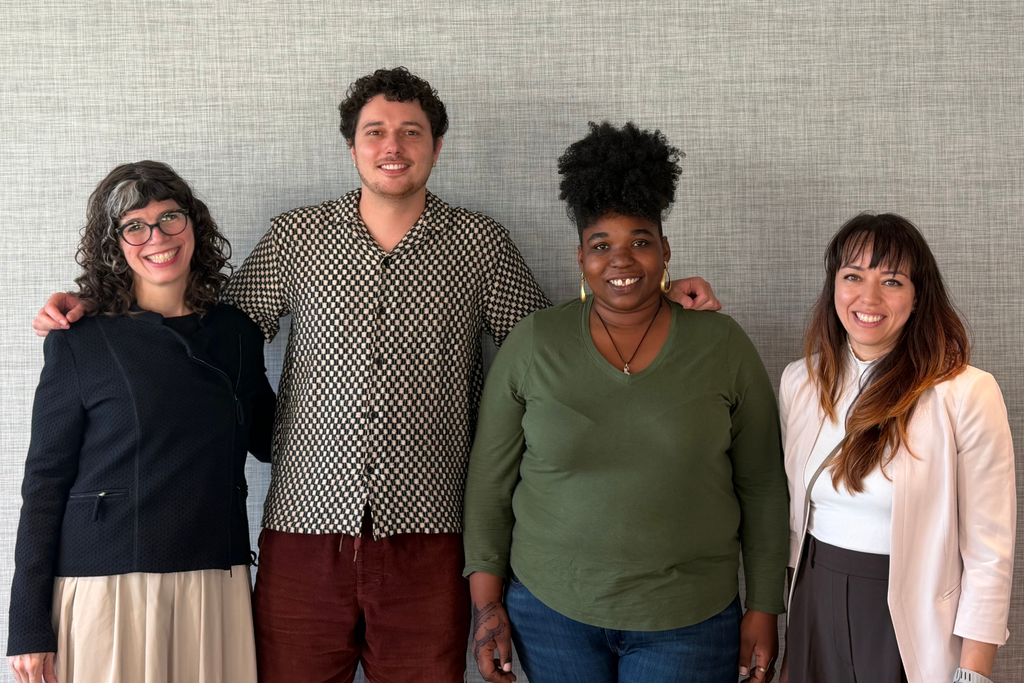
Last Tuesday, The Center for Environment, Community, & Equity hosted a panel of guest speakers to discuss concerns surrounding data centers’ relationship with environment, community, and equity. They brought valuable perspectives on the subject by sharing their experiences organizing to stop the construction of data centers, platforming stories about communities coming together to fight data centers, and studying the impacts of data center infrastructure on landscapes.
Taylor Frazier McCollum began organizing around data center construction when a hyper-scale data center was proposed for the site of the Landover Mall in Prince George’s County Maryland. She watched a More Perfect Union documentary on data centers and knew this would be bad for her community. Taylor posted a Change.org petition in a countywide online forum and began making digital content about the planned construction. Her content gained traction online and quickly went viral with the help of a local chapter of the Party for Socialism and Liberation (PSL), igniting her community to organize around the cause.
The Prince George’s County Council passed a two-year moratorium; however, Taylor spoke about continuing the fight against data center construction. She views the moratorium as “kicking the can down the road” and not addressing the fundamental issues with data centers impacting communities in Maryland. To that end, Taylor is pushing for a statewide ban on new data centers. She cited the fracking moratoriums in Maryland that eventually led to a complete ban, asserting that for data centers “a permanent ban will come, we’ve just got to keep pushing.” You can follow her work on Instagram as she continues to fight for a statewide ban in Maryland at @NoLandOverData.
Saul Levin began working in environmental activism as a part of the push to enact the Green New Deal and has since shifted to investing coaching into burgeoning political movements. Data center construction in his home state of Michigan started to impact Saul’s community and he started asking, how do you kill a data center construction project? As word got around that he was considering these questions, Saul became a touchstone for others asking the same questions. He connected interested people through a Signal group chat and later started The Hum, a podcast platforming stories about communities coming together to oppose new data centers.
In our panel, Saul emphasized that none of the technology we use now requires the construction of the hyper-scale data centers that are being proposed and built across the country. Instead, they are being used to build new AI tools for the extremely wealthy. Because of the issues that come from data centers (e.g. increased pollution, higher energy pills, etc.), and an association between them and other social ills created by technology (social media addiction, AI in schools, etc.), Saul said that mobilizing people to protest was simple. People came together across partisan lines because organizers can easily say, “if you hate data centers, and you’re respectful, come along.” He also articulated hope for protests to work. While fighting a data center in New Jersey, the number of protesters who showed up was enough for the city council to immediately change the proposed site from a data center to a public park. If you want to listen to stories of communities organizing to protest data centers, you can find The Hum at https://www.buzzsprout.com/2614475.
Samantha Bradshaw is an Assistant Professor at American University and the director of the Center for Security, Innovation, and New Technology. Professor Bradshaw’s work focuses on making the often-invisible digital infrastructure that influences our lives visible. As data centers become more visible, she is mapping both where they are being built and the shift in land use associated with data center construction. They are often built on agricultural land, driving up land rents and removing land from food production. Her work tackles agricultural justice associated with data center construction and the disproportionate impacts on farmers. Although most data centers are in urban areas, and handle daily internet use and online connectivity, because of AI development, hyper-scale data centers are being constructed on increasingly rural areas. In fact, Professor Bradshaw noted that 36% of new data centers are on agricultural land “permanently transforming these landscapes” away from staple crops such as corn, wheat, soy, or pastureland.
Professor Bradshaw emphasized that although we have very little data about data centers, their associated impacts, what they work on, and their environmental costs, the centers certainly store a lot of data about us. She spoke about how “we need the data to hold companies accountable,” and through her research on data center construction and its impacts, works to provide that data. You can follow her research at https://www.american.edu/sis/centers/security-technology/about.cfm