
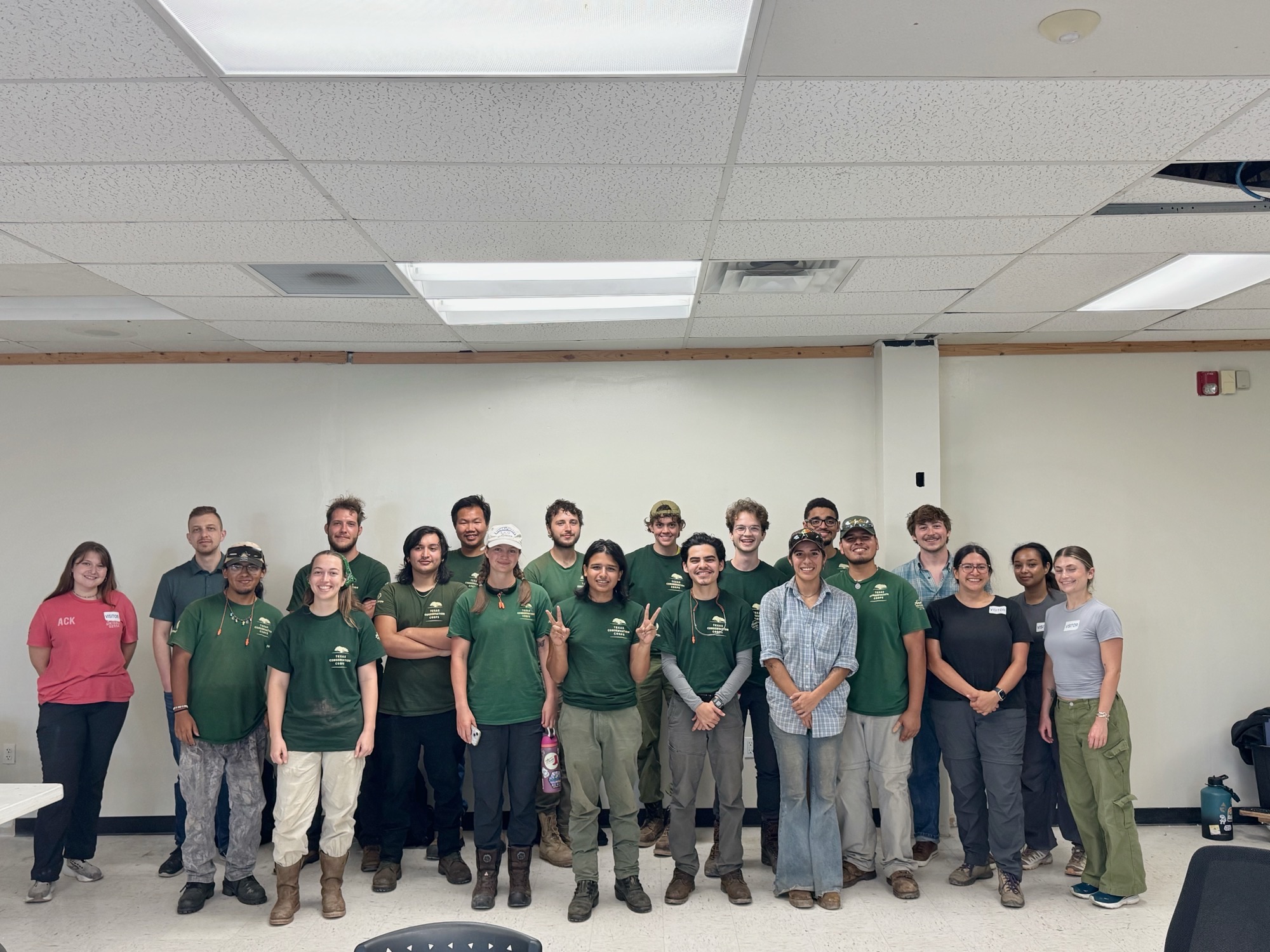
Last week, the CECE research team and DataCorps fellows visited Austin, Texas, where we studied corpsmembers working for the Texas Conservation Corps (TXCC). The TXCC is housed under American YouthWorks (AYW), a nonprofit focused on workforce development, disaster response, and environmental restoration. The TXCC employs young people aged 16-35 to conserve natural landscapes and recreational areas across the central southern United States and prepare them for professions in environmental conservation.
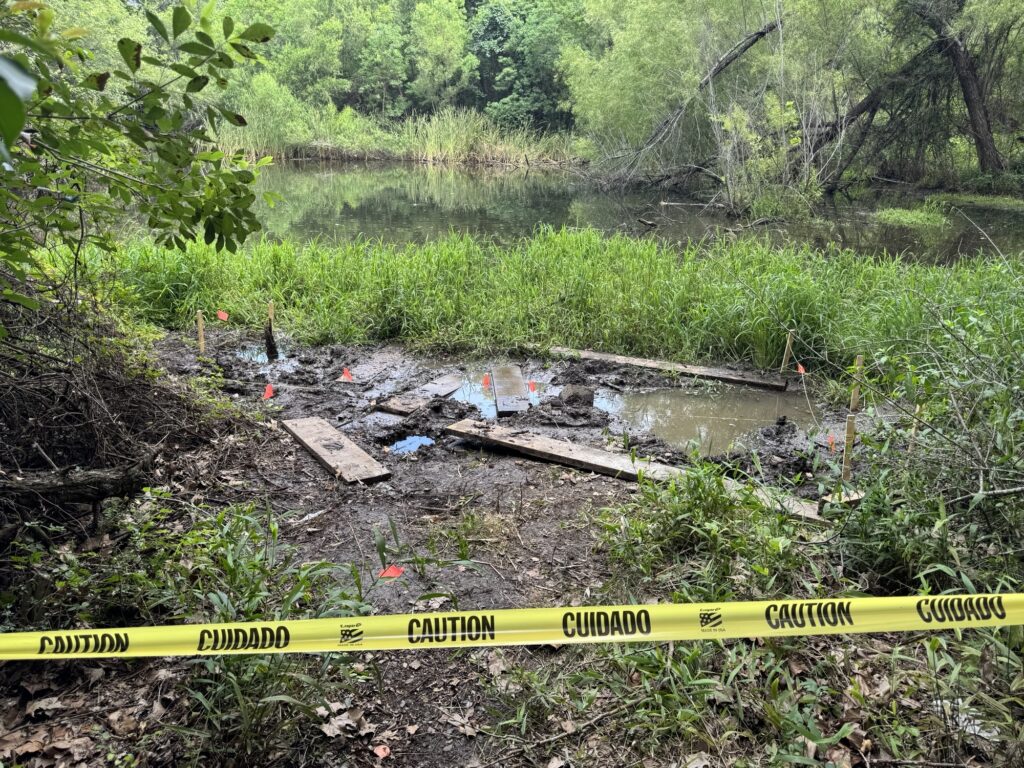
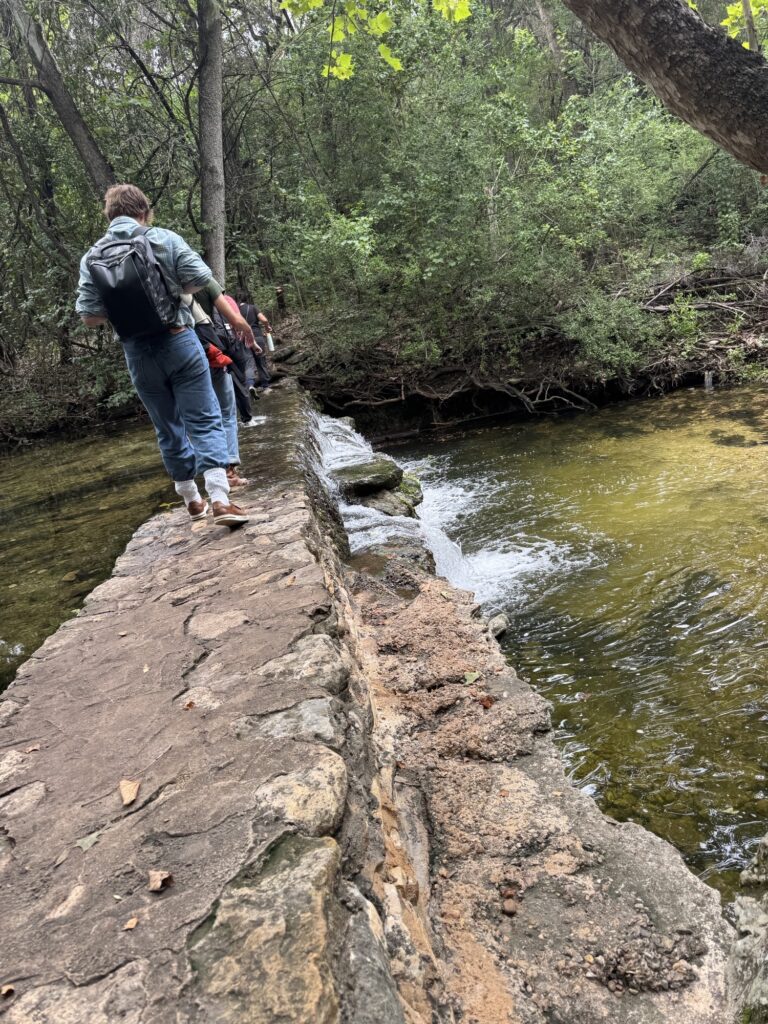
One of TXCC’s many ongoing conservation projects is the creation of the “Bull Creek Greenbelt,” an endeavour that will connect multiple disconnected hiking trails throughout Austin. Our research team visited one of their sites while two crews were working on this project: one crew was building a fence, and the other was preparing to build a dock on a small lake. After a 15-minute hike through the park, we observed a supervisor demonstrate for corpsmembers how to measure and map the footprint of the dock using stakes and flags as markers. Given that none of the crew members had previously built a dock, they gained hands-on experience by working through each step alongside the supervisor, who explained how the foundation of the dock would be constructed. The project illustrated the experiential learning model that underpins corps work: enabling members to develop technical skills while restoring the environment. As temperatures continued to rise throughout the morning and the heat index reached unsafe levels for prolonged outdoor work, the crews were dismissed around noon to prioritize their safety.
We returned to American YouthWorks later in the day for a focus group with sixteen corpsmembers. Participants described several motivations for joining the corps, including career exploration, skills development, preparation for undergraduate and graduate school, and environmental stewardship. Several members also described their work as deeply meaningful to them on a personal level, with one member referring to it as “soulful work, where we can see the fruits of our labor.” Corpsmembers highlighted opportunities to develop professional skills related to GIS mapping, water quality monitoring, urban forestry, and tree planting. Others appreciated that they had been trained in chainsaw operations, debris removal, and disaster recovery skills such as mucking and gutting. These programs provide a pathway to develop technical skills useful in the environmental world while making an impact in local communities. Several members expressed interest in careers in environmental fields, including environmental law, atmospheric science, wildlife conservation, disaster management, palaeontology, and renewable energy policy. As our fieldwork this summer comes to a close, the Texas Conservation Corps demonstrated how service corps work can simultaneously strengthen disaster resilience, foster community, and develop the next generation of environmental leaders.
Written by: Elena Edo