
Second Year of DataCorps Fellowship Kicks Off With Site Visit in Seattle
The Workforce Development & the 4Rs research team, along with the 2026 cohort of DataCorps Fellowship, kicked off the first site visit of the summer in Seattle, Washington. Seattle is the first of three visits to various cities throughout the country where our team will be evaluating and gathering data on disaster-related service corps programs. EarthCorps, a Seattle-based non-profit, provides training for young adults to gain leadership skills and on-the-ground experience with environmental restoration projects. EarthCorps crews implement restoration projects throughout Seattle and Western Washington, some of which include noxious plant removal, native plant installation, trail construction and maintenance, and forest monitoring. While in Seattle, our research team visited areas where crew members are carrying out these projects, surveyed crew members, and held a focus group to better understand the EarthCorps workforce. The primary objective of these surveys and focus groups is to explore members’ motivations for joining the organization, experience with disasters, barriers to project implementation, and levels of civic engagement.
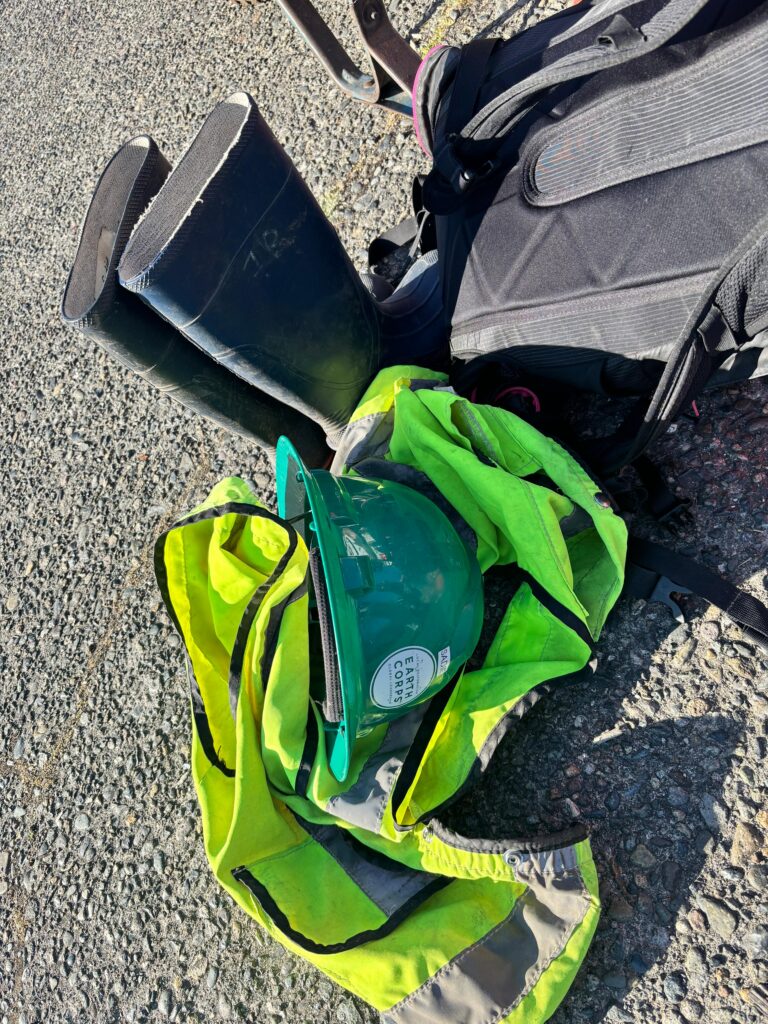
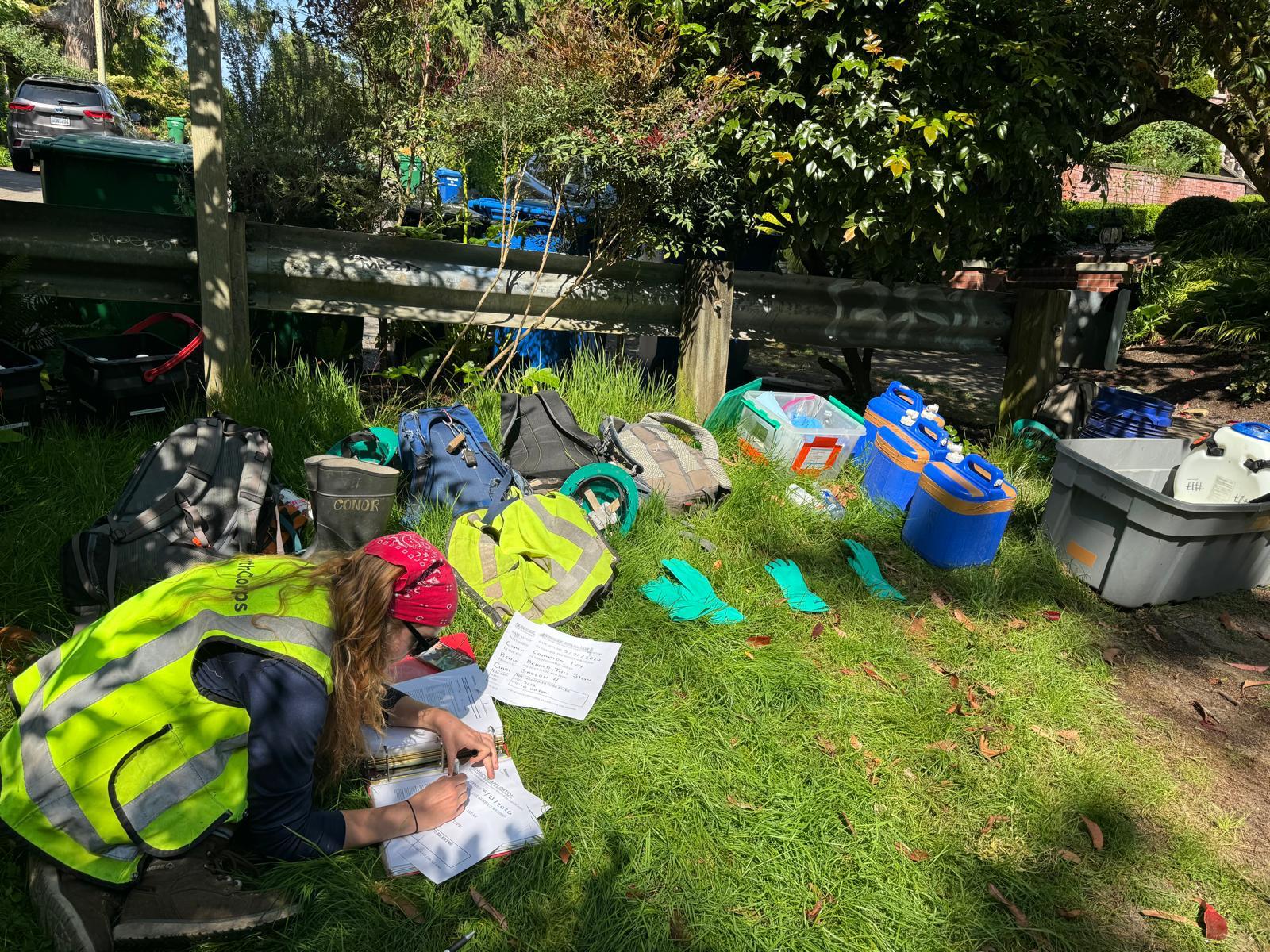
On the first day of our visit, our research team visited two sites where EarthCorps crews have been working on restoration projects. Our first visit was to Magnuson Park, a beautiful park situated on a former naval airfield in Seattle’s Sandpoint neighborhood with an impressive view of Mt. Rainier. The intentional communication style the crew members demonstrated before beginning their day was equally impressive; the crew held a morning circle where team members talked about their energy levels, safety concerns, and tasks for the day. Crew members explained that their tasks at Magnuson Park primarily involve removal of noxious plants such as blackberry and ivy, planting new trees, composting, and putting up fencing to protect newly planted trees from off-leash dogs and bunnies. While speaking to crew members about noxious plant removal, we learned that blackberries in particular tend to kill native plants, which destroys the root systems that hold the soil in place and makes the land susceptible to mudslides and erosion.
The second site visit took place at Colman Park, located in Seattle’s Mount Baker neighborhood. At this site, crew members worked primarily on noxious plant removal, which is critical for hiking-trail preservation. One crew member explained that the team uses ARCGIS and partner-provided information to track areas where manual noxious plant removal is not possible. Manual removal of noxious plants on steeper slopes can contribute to soil erosion, so in these areas, the crews use herbicide spraying instead to preserve soil health. Crew members take great care to ensure that the noxious plant removal technique they use is appropriate and improves the ecosystem in the areas they work.
These site visits gave us an opportunity to understand the extensive knowledge and commitment that crew members demonstrated around environmental stewardship and showcased how valuable EarthCorps crews are to preserving public lands for Washingtonians.
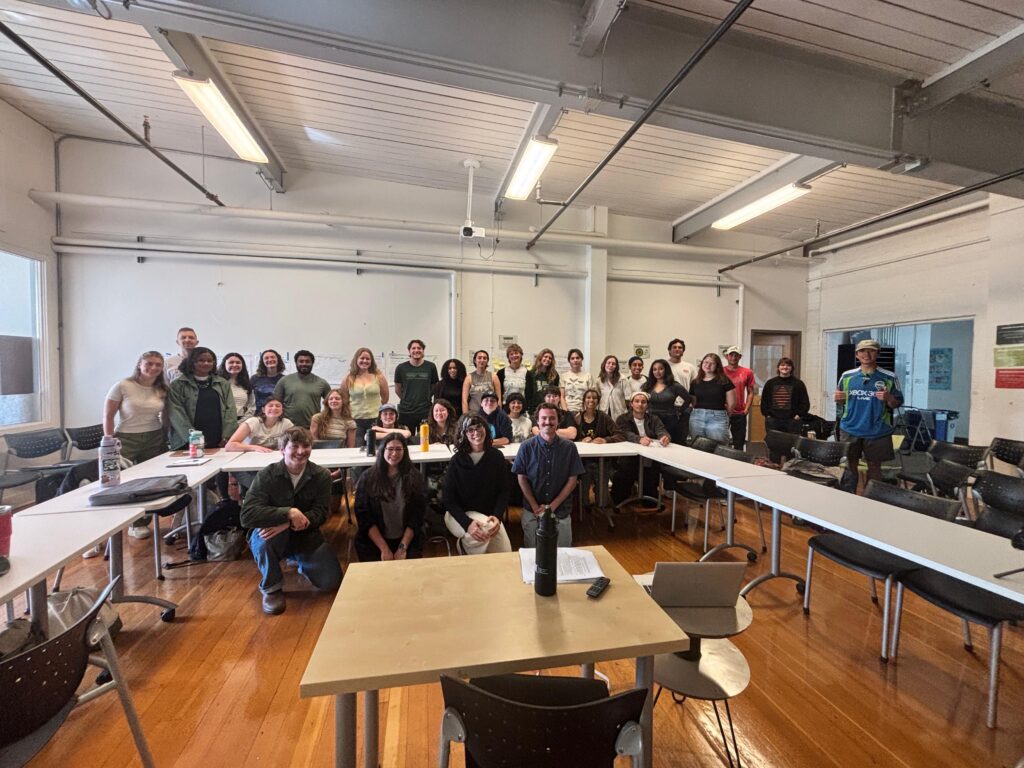
On the second day of our visit, our research team conducted a survey and focus group with the EarthCorps crews. In the focus group, crew members shared similar sentiments around why they joined EarthCorps; with many describing their interest in value-aligned work that makes a positive impact on the environment and community they serve. When speaking about motivations behind why members remain committed to this work, one crew member made a comment that particularly resonated with those present when she said, “This work is not supposed to fill your wallet, but your heart.” Comments like these particularly inspired me, especially when hearing about why crew members choose to continue working at EarthCorps, despite uncertainty about whether funding changes in the future might impact their jobs. Thew crew members we spoke with said they see their work as an act of resistance and prefer to have a job that protects the environment rather than getting lost in the monotony of corporate culture. Looking into the future, many members noted that they would like to continue working at EarthCorps if given the opportunity and deepen their ties with community partners to continue serving local needs.
Written by: Olive Swan